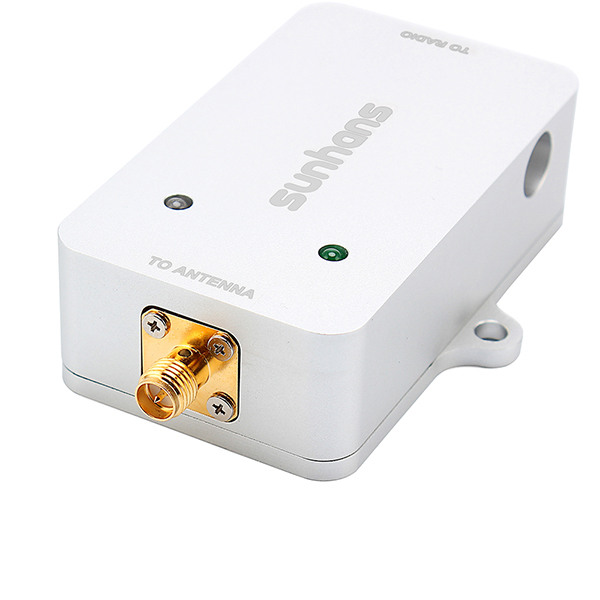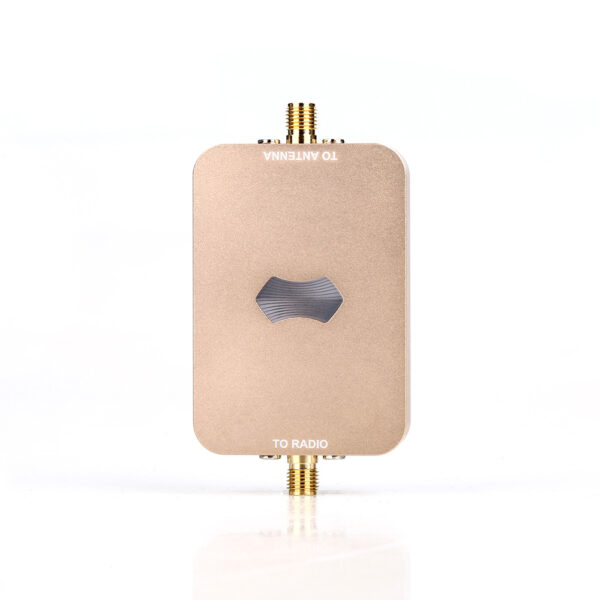
Choosing the best drone signal booster requires careful evaluation of frequency compatibility, signal amplification, installation space, and operating conditions. For OEM buyers, a suitable solution must match the UAV’s communication system and project requirements. Moreover, reliable radio-frequency performance and practical integration help control deployment costs.
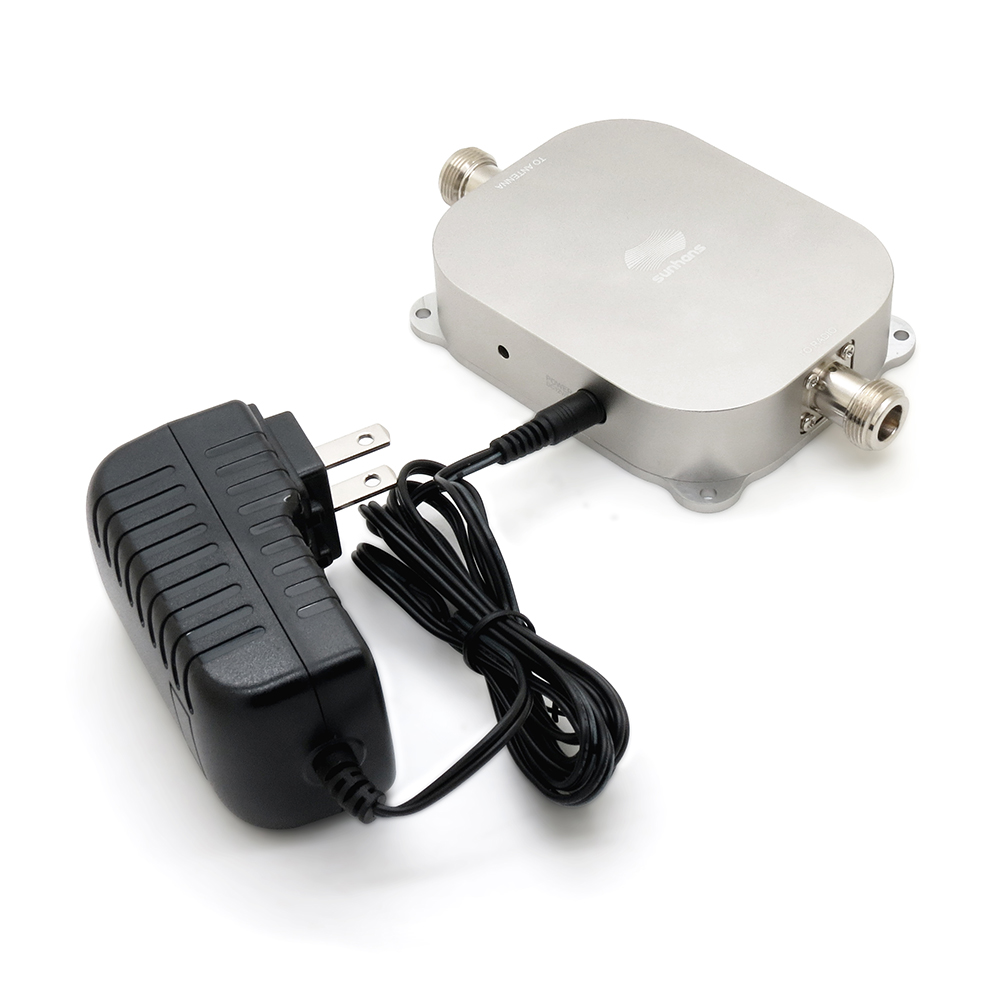
The Sunhans 4000 milliwatt dual-band WiFi signal booster supports 2.4 gigahertz and 5.8 gigahertz applications. Its bidirectional amplification, compact enclosure, and aluminum alloy construction suit selected UAV connectivity projects. However, buyers should verify antenna compatibility, legal transmit-power limits, and installation conditions before procurement.
How Can a Drone Signal Booster Support Different Communication Requirements?
Different UAV projects prioritize different combinations of coverage, throughput, and connection stability. For example, inspection drones may transmit operational data, while surveillance platforms may handle video streams. Therefore, OEM buyers should select frequency bands according to their radio equipment and application requirements.
Evaluate dual-band amplification
The Sunhans model covers 2.4 to 2.5 gigahertz and 5.0 to 5.8 gigahertz. These ranges accommodate compatible WiFi equipment operating within the supported frequencies.
The 2.4 gigahertz band can support applications that prioritize coverage. Meanwhile, 5.8 gigahertz can suit compatible systems requiring greater available channel bandwidth. Actual results depend on interference, antennas, terrain, and applicable radio regulations.
The amplifier provides up to 4,000 milliwatts of output power. Its transmit gain ranges from 16 to 19 decibels. Additionally, its receiver gain reaches up to 12 decibels.
Nevertheless, amplification alone cannot guarantee a specific communication distance. OEM engineers should test the complete radio link under representative operating conditions.
Explore drone signal booster product options to identify configurations suited to your project.
Which Technical Specifications Matter for UAV Integration?
A suitable booster must match the existing controller, onboard radio, antennas, and power supply. Therefore, procurement teams should confirm electrical and interface requirements before approving samples.
Check bandwidth, connectors, and radio compatibility
The Sunhans booster supports channel widths of 20, 40, and 80 megahertz. Consequently, engineers can assess its suitability for compatible data-transfer requirements. However, the selected radio must support the intended channel configuration.
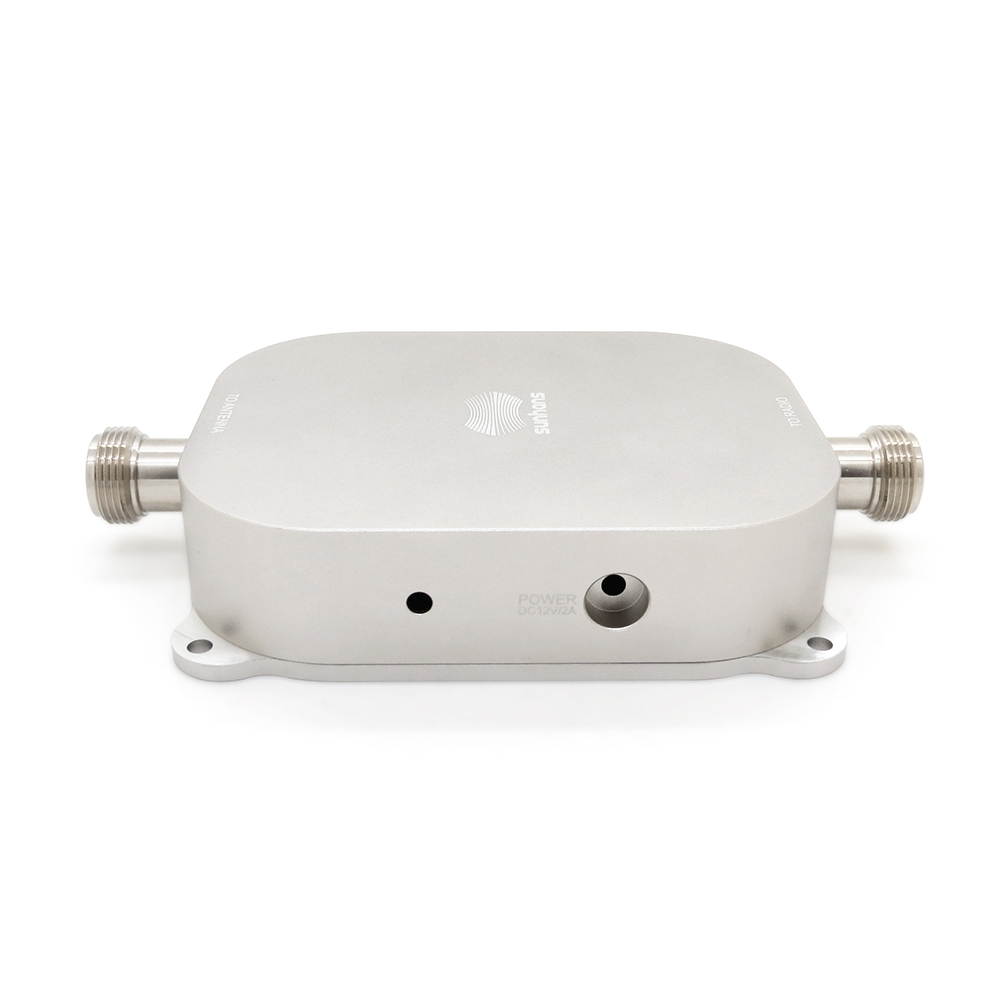
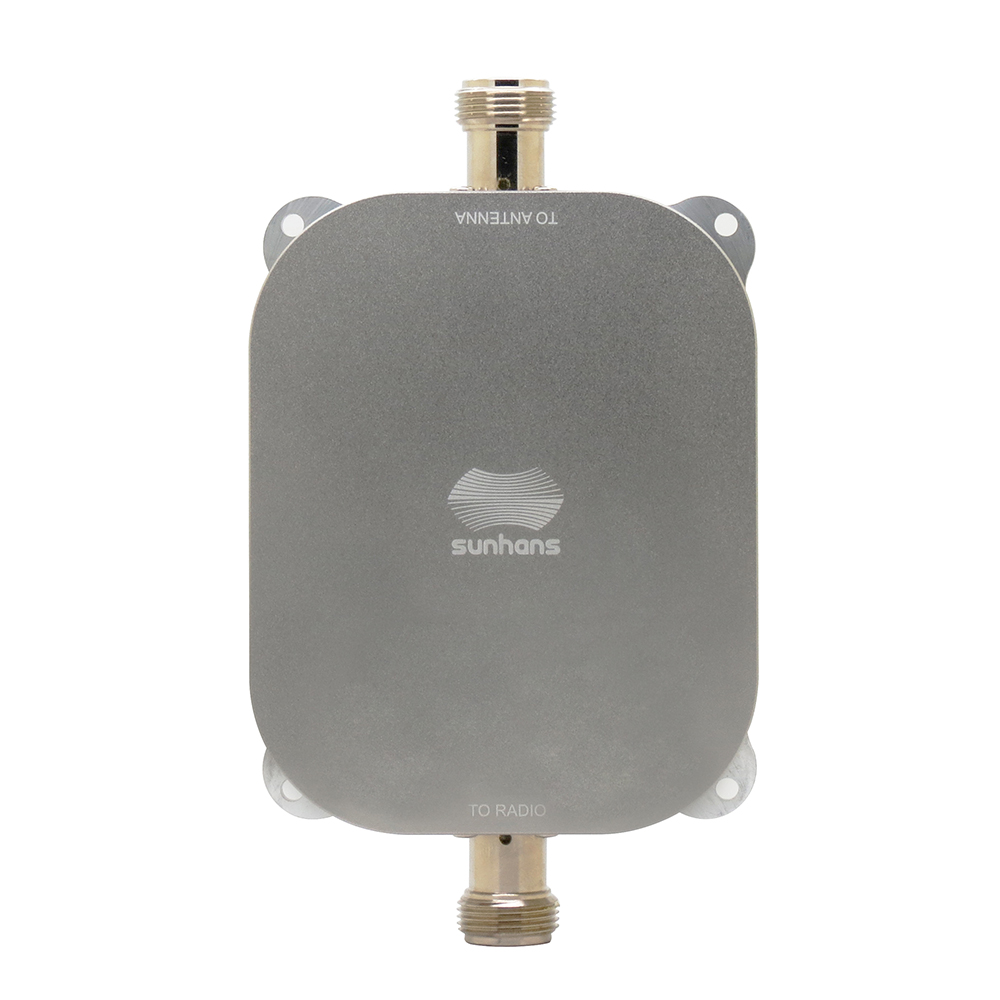
The unit uses N-K female connectors and supports bidirectional amplification. Its listed WiFi standards include IEEE 802.11b/g/n/a/ac. Since product documentation can vary between configurations, confirm the exact supported standards.
Moreover, the typical noise figure is no more than 3.5 decibels. Frequency response stays within plus or minus 1 decibel across the operating range. These specifications help engineers evaluate signal-path requirements.
However, the installation must also match the radio’s input power and antenna impedance. Request a connection diagram before integrating the amplifier into an existing UAV system.
How Should OEM Buyers Evaluate Durability and Installation Space?
UAV projects often impose strict limits on equipment weight, dimensions, and thermal management. Therefore, buyers should assess mechanical integration alongside electrical performance.
Match enclosure design with operating conditions
The booster weighs 318 grams and measures 13 centimeters by 7.7 centimeters by 2.4 centimeters. Its cast aluminum alloy enclosure supports heat dissipation and mechanical integration.
The stated operating temperature ranges from minus 40 to plus 70 degrees Celsius. The specified operating humidity reaches 75 percent relative humidity.
These ratings provide useful design references for suitable environments. Nevertheless, they do not establish resistance to rain, vibration, or every outdoor condition.
The product description identifies indoor WiFi applications and selected UAV uses. Therefore, airborne deployment requires additional checks for mounting, cooling, vibration, and environmental protection.
Furthermore, engineers should account for the amplifier’s weight and power consumption. Confirm the available payload capacity and the installation’s thermal performance before finalizing the design.
Review technical guidance for signal booster integration to support specification checks and deployment planning.
How Can OEM Buyers Balance Performance, Quality, and Cost?
B2B procurement requires more than comparing advertised output power. Instead, buyers should consider compatibility, manufacturing consistency, operating costs, and technical support.
Compare specifications and compliance requirements
The supplied configuration includes a 12-volt, 2-amp power adapter and user manual. It also provides power and activity status LEDs for basic operating checks.
Before bulk purchasing, request a representative sample and evaluate link performance. Additionally, inspect connector quality, enclosure workmanship, thermal behavior, and electrical stability.
OEM buyers should also confirm available customization options, minimum order quantities, delivery schedules, and warranty terms. Do not assume every hardware modification is available without supplier confirmation.
Finally, verify applicable radio approvals and permitted transmit-power levels for the destination market. Confirm that the complete UAV system complies with relevant requirements.
| Evaluation item | Sunhans specification | OEM verification point |
|---|---|---|
| Frequency range | 2.4–2.5 and 5.0–5.8 gigahertz | Confirm radio and antenna compatibility |
| Output power | 4,000 milliwatts | Verify permitted operating power |
| Transmit gain | 16–19 decibels | Test the complete radio link |
| Receiver gain | Up to 12 decibels | Evaluate receiver performance |
| Channel width | 20, 40, and 80 megahertz | Match the connected radio |
| Connectors | N-K female | Confirm cable and antenna interfaces |
| Operating temperature | Minus 40 to plus 70 degrees Celsius | Assess thermal and environmental needs |
| Dimensions and weight | 13 by 7.7 by 2.4 centimeters; 318 grams | Check mounting and payload capacity |
| Certifications | Not specified in the supplied information | Request applicable certificates and reports |
Q&A: OEM Drone Signal Booster Selection
Q1: Can this booster suit different UAV projects?
Yes, it may suit compatible WiFi systems operating within its supported frequency ranges. However, engineers must verify the radio link, antennas, installation, and power requirements.
Q2: Does 4,000 milliwatts guarantee longer drone range?
No. Actual range depends on antenna characteristics, interference, terrain, receiver sensitivity, and regulatory limits. Field testing provides more useful project-specific evidence.
Q3: Is this model suitable for outdoor drone installation?
Its temperature and humidity ratings provide useful reference points. However, buyers should verify weather protection, vibration tolerance, cooling, and mounting suitability for airborne use.
Q4: How can OEM buyers improve purchasing value?
Define requirements before requesting quotations. Then compare verified specifications, sample results, quality controls, warranty terms, and customization availability. This process helps buyers select a practical solution while managing total project costs.