Unmanned aerial vehicle (UAV) operators demand uninterrupted video links and long-range remote telemetry during critical flight operations. Furthermore, standard radio transmitters suffer severe signal attenuation when operating near industrial structures or dense foliage. Fortunately, deploying specialized high-power wifi boosters dramatically extends flight operational boundaries while ensuring full lead-free compliance standards.
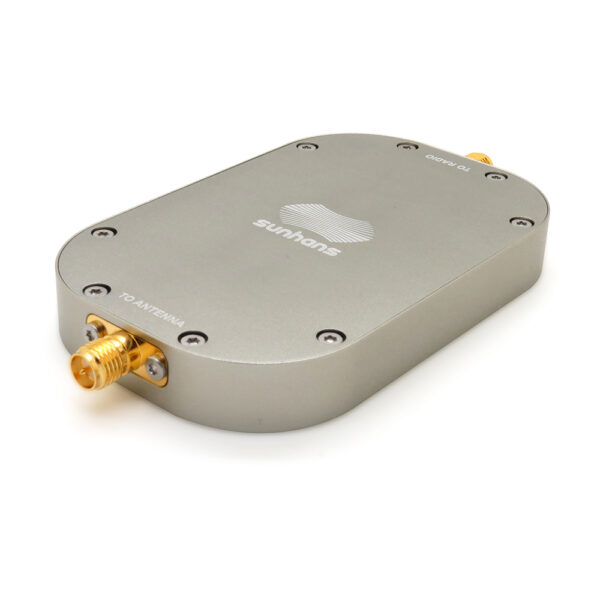
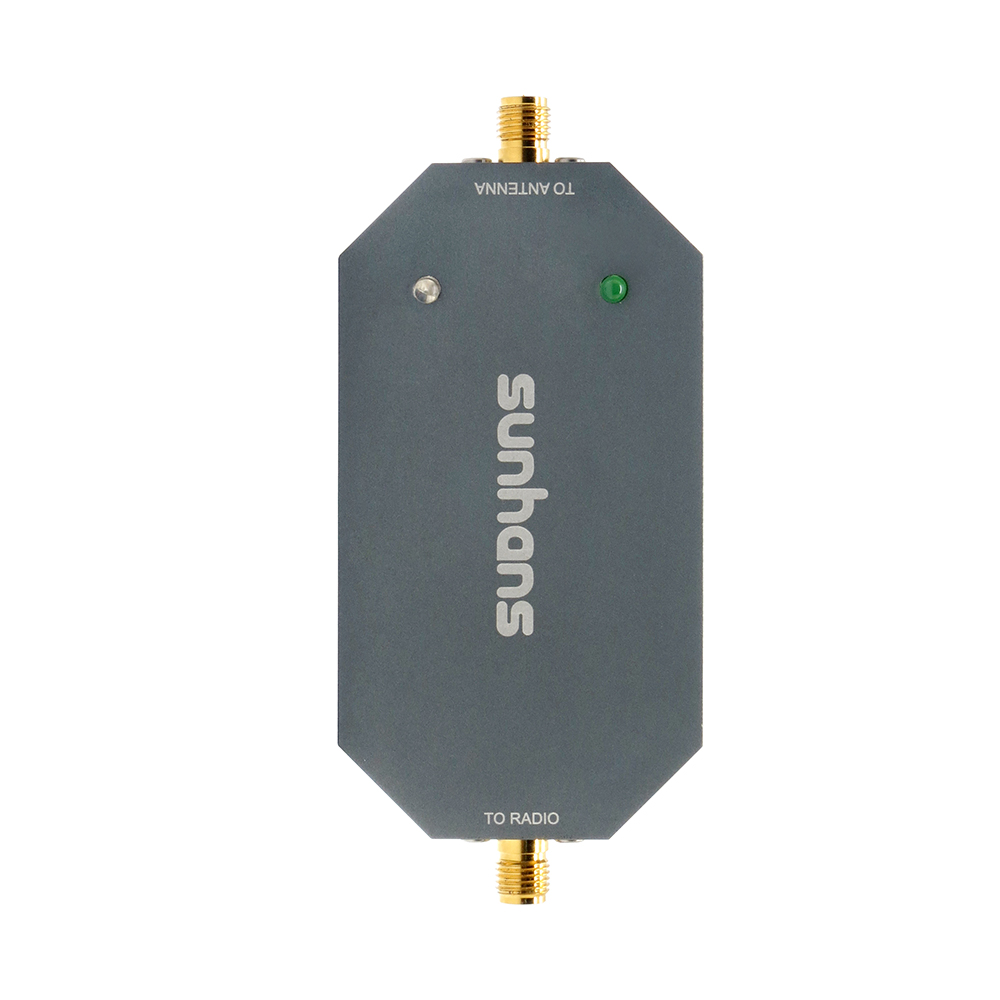
The SUNHANS eSunRC 4000mW 5.8GHz WiFi Signal Booster resolves long-distance transmission bottlenecks effortlessly. Built with CNC-machined aluminum housing, this compact amplifier delivers 36dBm output power for extreme signal stability. Moreover, drone pilots maintain reliable high-definition video telemetry across vast survey zones without risking control signal loss. Explore our product-category to discover professional drone booster hardware and custom antenna systems.
In addition, advanced radio frequency filtering minimizes ambient signal distortion during high-speed aerial maneuvers. Consequently, UAV operators achieve pristine wireless throughput across expansive flight corridors with total confidence. Furthermore, lightweight engineering ensures effortless mounting on ground control stations without adding unnecessary equipment bulk.
Aerial Transmission Bottlenecks: Resolving 4 Drone Pilot Issues
UAV operators encounter severe video freezing, spatial signal blockage, radio frequency congestion, and telemetry dropouts regularly. Below, we analyze four primary drone communication challenges and our technical amplification solutions.
Frequent Video Feed Freezing During Long-Range Flights
Standard drone transmitters lose video link quality when flying beyond short visual line-of-sight distances. Specifically, weak RF signals cause choppy FPV displays, creating hazardous control conditions for pilots. Therefore, remote operators require active RF power amplification to maintain stable wireless telemetry feeds. Consequently, utilizing specialized high-power wifi boosters prevents sudden video freezing over extended operational ranges.
Example: A commercial aerial mapper surveys a remote forest zone two kilometers away from the base station. The live video feed stutters and cuts out, forcing the pilot to abort the flight prematurely. Check our technical-guide for drone antenna alignment and long-range RF transmission setup techniques.
In contrast, our 4000mW 5.8GHz booster supplies 36dBm output power directly to the transmitting system. Furthermore, high transmit gain metrics maintain crystal-clear video telemetry over several kilometers effortlessly. Thus, survey teams complete complex mapping flights efficiently while preserving continuous visual monitoring.
Physical Obstacle Attenuation in Industrial Survey Environments
Concrete buildings, metal storage silos, and heavy forest canopy block high-frequency 5.8GHz wireless signals rapidly. Specifically, physical barriers weaken electromagnetic radio waves, triggering automatic return-to-home fail-safe protocols unexpectedly. Therefore, commercial drone pilots require high-gain RF amplification to penetrate dense structural obstacles without signal degradation. Consequently, deploying a wifi booster for drones ensures stable link integrity around obstacle-heavy flight paths.
Example: An inspection team flies an industrial drone around heavy steel machinery inside a busy refinery. Standard radio signals bounce off steel beams, dropping the control link and stalling safety inspections. In contrast, our SUNHANS amplifier projects robust 4000mW signal output through dense structural barriers.
Additionally, CNC-machined aluminum shielding blocks environmental radio interference, protecting sensitive receiving components. Furthermore, high-gain signal penetration prevents packet loss around complex industrial structures during close-proximity inspection maneuvers. As a result, commercial pilots complete critical infrastructure surveys safely without experiencing dangerous signal drops.
Radio Frequency Congestion in Urban Flight Corridors
Operating commercial UAVs near residential areas exposes telemetry channels to heavy ambient Wi-Fi noise continuously. Specifically, overlapping 5.8GHz consumer networks create cross-channel interference, corrupting real-time flight telemetry packets. Therefore, professional drone pilots need high-power amplification to overpower surrounding electromagnetic background noise. Consequently, selecting a 5.8GHz high power wifi booster for drones guarantees pristine signal clarity.
Example: A real estate videographer captures footage over an urban development near dozens of active home routers. Signal noise causes severe control lag, making precise camera movements nearly impossible during the shoot. In contrast, our booster supports flexible 20/40/80MHz channel bandwidths across the 5000–5875MHz spectrum.
Additionally, operating across clean high-band channels bypasses crowded local consumer radio frequencies easily. Furthermore, strong 36dBm output power completely overpowers ambient radio noise throughout busy metropolitan areas. Thus, commercial videographers capture smooth aerial footage without experiencing controller responsiveness delay.
Excessive Equipment Weight Disruption on Portable Ground Rigs
Adding heavy auxiliary hardware to portable ground control stations causes operator fatigue during lengthy outdoor flights. Specifically, bulky external amplifiers strain mounting brackets and complicate field transport for remote survey personnel. However, compact high-efficiency amplification modules deliver superior output power without adding unnecessary physical payload burden.
Example: A search and rescue operator hikes into steep mountain terrain carrying heavy ground control gear. Bulky amplifier batteries weigh down the pack, slowing field deployment during urgent emergency response operations. In contrast, our eSunRC booster weighs just 65 grams in a compact 9.14×4.1×1cm footprint.
Additionally, included mounting Velcro and custom adapters ensure clean, rapid integration onto handheld transmitters. Furthermore, wide voltage support streamlines connection with standard portable field batteries without requiring complex power converters. Consequently, field operators deploy powerful wireless amplification systems rapidly during critical rescue missions.
Technical Solutions: Precision Engineering for Drone Telemetry Boosters
Superior drone signal boosters combine high-power RF amplification, low-noise signal filtering, durable thermal housing, and flexible channel management. Furthermore, precision manufacturing guarantees continuous signal stability across demanding aerial environments.
4000mW High Output Power and CNC Shielded Architecture
Engineers design our 4000mW drone wifi signal booster using high-grade CNC-machined aluminum alloy enclosures. Specifically, the rugged metallic body acts as an efficient heat sink during extended outdoor operations. Furthermore, solid aluminum shielding protects internal RF circuitry against harsh external electromagnetic interference effectively. Consequently, UAV operators rely on a drone signal booster engineered for demanding environmental conditions.
In addition, full compliance with IEEE 802.11a/n/ac wireless standards ensures seamless integration with modern radio gear. Specifically, plug-and-play RP-SMA connectors support direct attachment to high-gain directional or omnidirectional antennas. Discover specialized connection accessories in our product-category commercial UAV networking catalog.
Ultra-Low Noise Figure and High Transmit Efficiency
Our booster incorporates an advanced low-noise figure level of ≤3.5dB alongside 17–20dB transmit gain metrics. Specifically, low-noise amplification cleans incoming wireless signals, maximizing reception sensitivity across distant flight nodes. Learn details in our technical-guide long-range RF amplification and receiver sensitivity guide.
Moreover, real-time LED indicators provide instant visual confirmation of power delivery and active signal transmission. Thus, ground crews verify system status quickly before launching long-range autonomous drone missions. Consequently, commercial flight directors optimize operational safety while securing maximum wireless telemetry ranges.
Product Parameter & Specification Overview
Review key technical specifications comparing standard 100mW transmitters against our SUNHANS eSunRC 4000mW Booster.
| Technical Parameter / Feature | Standard 100mW Drone Transmitter | SUNHANS eSunRC 4000mW WiFi Booster | Aerial & Operational Advantage |
| RF Output Power | Standard 100mW (20dBm) | High-Power 4000mW (36dBm) Output | Multiplies Signal Range & Overpowers Ambient RF Noise |
| Frequency Spectrum Support | Fixed 5.8GHz Narrow Band | Broad 5000–5875MHz Spectrum | Bypasses Congested Frequencies across 20/40/80MHz Channels |
| Transmit Gain Metrics | Standard 0–5dB Native Gain | High-Efficiency 17–20dB Transmit Gain | Maintains Stable Long-Distance Telemetry & Video Feeds |
| Noise Figure Level | High Noise Distortion (≥6.0dB) | Low Distortion (≤3.5dB Noise Figure) | Cleans Weak Signal Reception from Distant Flight Nodes |
| Hardware Body & Weight | Plastic Casing (Variable Weight) | Ultra-Light CNC Aluminum (65g, 9.14×4.1×1cm) | Dissipates Heat Efficiently & Simplifies Transmitter Mounting |
| Antenna Connection Interface | Fixed Internal Antennas | Standard RP-SMA Connector Interface | Enables Easy Attachment of Custom High-Gain Antennas |
Versatile Applications in Commercial UAV and Remote Systems
Modern commercial drone applications demand adaptable radio frequency hardware that functions reliably across diverse field conditions. Furthermore, powerful signal boosters perform exceptionally during industrial inspections, agricultural mapping, FPV racing, and long-range UAV surveillance.
For instance, agricultural survey teams utilize high-power boosters to inspect sprawling farmlands in single automated flight passes. Specifically, stable 36dBm signal output maintains real-time multispectral imaging links across hundreds of crop acres. Consequently, farm managers collect complete crop health data rapidly without experiencing connection dropouts.
Additionally, competitive FPV drone racers install 5.8GHz signal amplifiers on ground station receivers during outdoor tournament events. High transmit gain ensures instantaneous control response while navigating high-speed obstacles around challenging outdoor race tracks. Thus, pilots execute sharp cornering maneuvers with absolute confidence in their wireless control link. Therefore, our high-power wifi boosters successfully unite long-range coverage, low-latency performance, and rugged hardware reliability.